Keep watering until the ground freezes
Evergreens keep losing water all winter, but once the ground freezes their roots cannot replace it, so a dry fall sends them into winter short of moisture. Michigan State University Extension notes that watering evergreens when the fall is dry, before the ground freezes, reduces winter damage. Toronto Master Gardeners suggest a deep, slow watering twice a week until the weather cools, then once a week until winter arrives, and say not to put the hose away until late November.
Screen it or wrap it
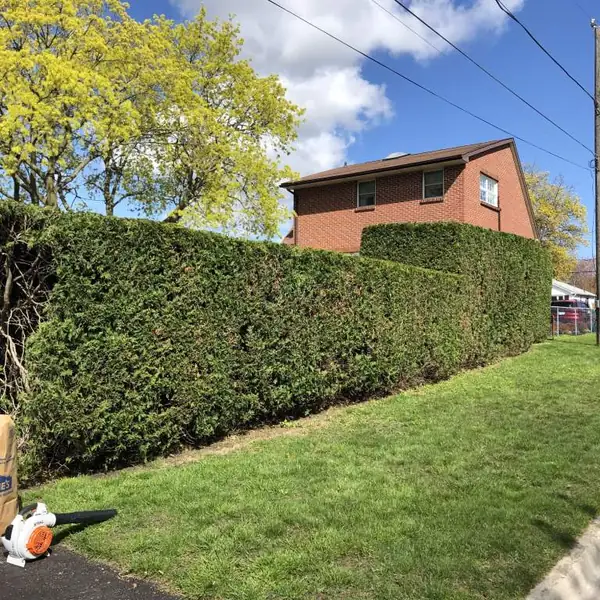
A burlap screen is a temporary wall on the windy or sunny side of the hedge that cuts the wind without wrapping the plants. Wrapping the whole cedar is the other option: Toronto Master Gardeners point out that a full wrap protects against strong wind and also supports branches against snow and ice. Decide each year based on how exposed the hedge is. A hedge on an open corner lot or facing the prevailing wind gets more from a screen than one sheltered by the house.
Tie it up against snow and ice
Snow and ice weigh branches down until they bend or split, which can leave a gap that takes years to fill. The risk is highest where snow lands on the hedge in heaps: under a roof edge where snow slides off, or beside a walk or driveway where shovelled snow gets thrown. Toronto Master Gardeners suggest tying twine to the base of the trunk and spiralling it up the plant to draw the branches gently in toward the centre.
Keep road salt off the hedge
Salt reaches cedars two ways, according to the University of Wisconsin Extension: as spray thrown up by traffic on wet roads, which can travel a long way, and through the soil from melted, salty snow. Spray damage shows in late winter and spring as browning on the side facing the road. Soil salt builds up more slowly and can weaken a hedge over several years. To limit it:
- put up burlap or snow fencing on the street side in late fall;
- do not shovel or blow salty snow onto the hedge's roots;
- rinse the foliage during a winter thaw, and soak the soil deeply in early spring to flush salt out;
- use less salt near the hedge, or mix it with sand for traction.
The same source notes that anti-transpirant sprays do not prevent salt spray injury, and that newly planted hedges are more vulnerable than established ones.
In spring, wait before you cut
Brown foliage in March does not always mean the cedar is dead. Michigan State University Extension notes that buds often survive when older foliage is damaged, and new growth replaces it once the plant starts growing in spring. Wait until new growth shows before cutting anything back, then trim the hedge in its usual season. Our guides on the best season to trim hedges and how to trim cedar hedges cover the timing and the technique.
When to call us
iTrim4U trims cedar hedges across Durham Region and Toronto from our office in Whitby. If winter leaves a hedge bent, gappy or overgrown, send us photos in spring and we will quote the trim. See hedge trimming and cedar hedge trimming, and check the hedge trimming bylaws in Whitby if your hedge runs along the street.
Sources